
5 Reasons Drivers Are Fixing That Chip With a $30 Bottle Instead of a $400 Windshield
A chip sits there for a week and feels stable. Then one cold night, one pothole, one blast of the defroster, and it's running across the glass. At that point the fix isn't resin — it's a replacement, and on any car with a camera behind the mirror that's four figures. Here's why drivers are handling it in the driveway first.



It Won't Stay That Size — And Nobody Catches It in the Act
The chip sat there a week and nothing happened, so it feels stable. It isn't. Glass expands in the sun and contracts overnight, and a chip is the weak point where all of that stress concentrates. Add a pothole, a car wash, or a hot defroster on cold glass, and it runs.
Nobody watches it happen. You just notice one morning that it got longer. And once a break crosses into a long crack, resin isn't the answer anymore — glass is.
There's a Camera Behind Your Mirror. That's What Makes It Expensive.
Replacing a windshield on an older car runs a few hundred dollars. But if your car has lane-keep assist, adaptive cruise, or automatic emergency braking, the forward-facing camera sits behind that glass — and it has to be recalibrated afterward with equipment no driver owns.
That's the line item that turns a $350 quote into a four-figure one. Filling the chip means you never open that door at all. The factory glass stays in, the camera stays where the manufacturer put it, and there's nothing to calibrate.
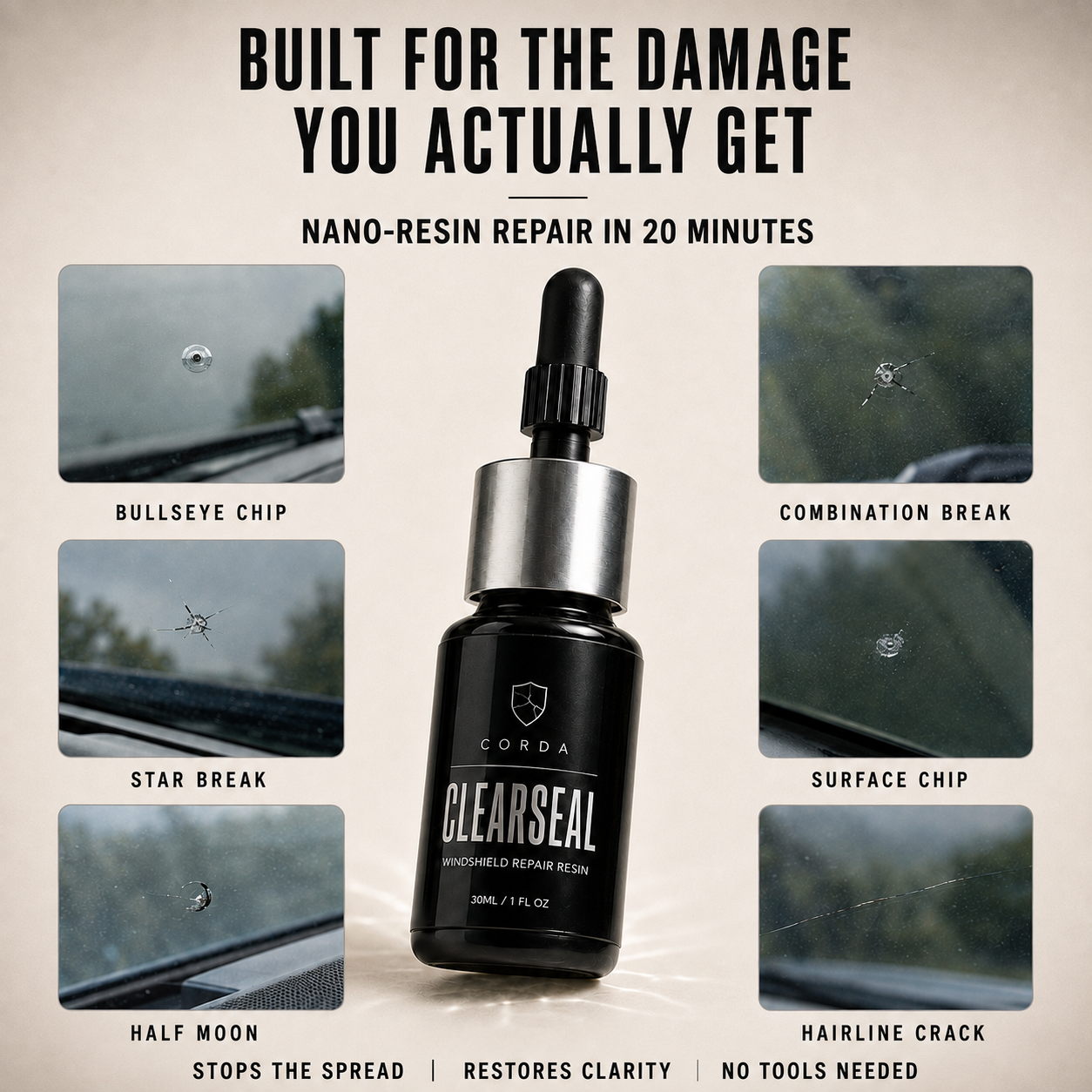
Built for the Damage You Actually Get
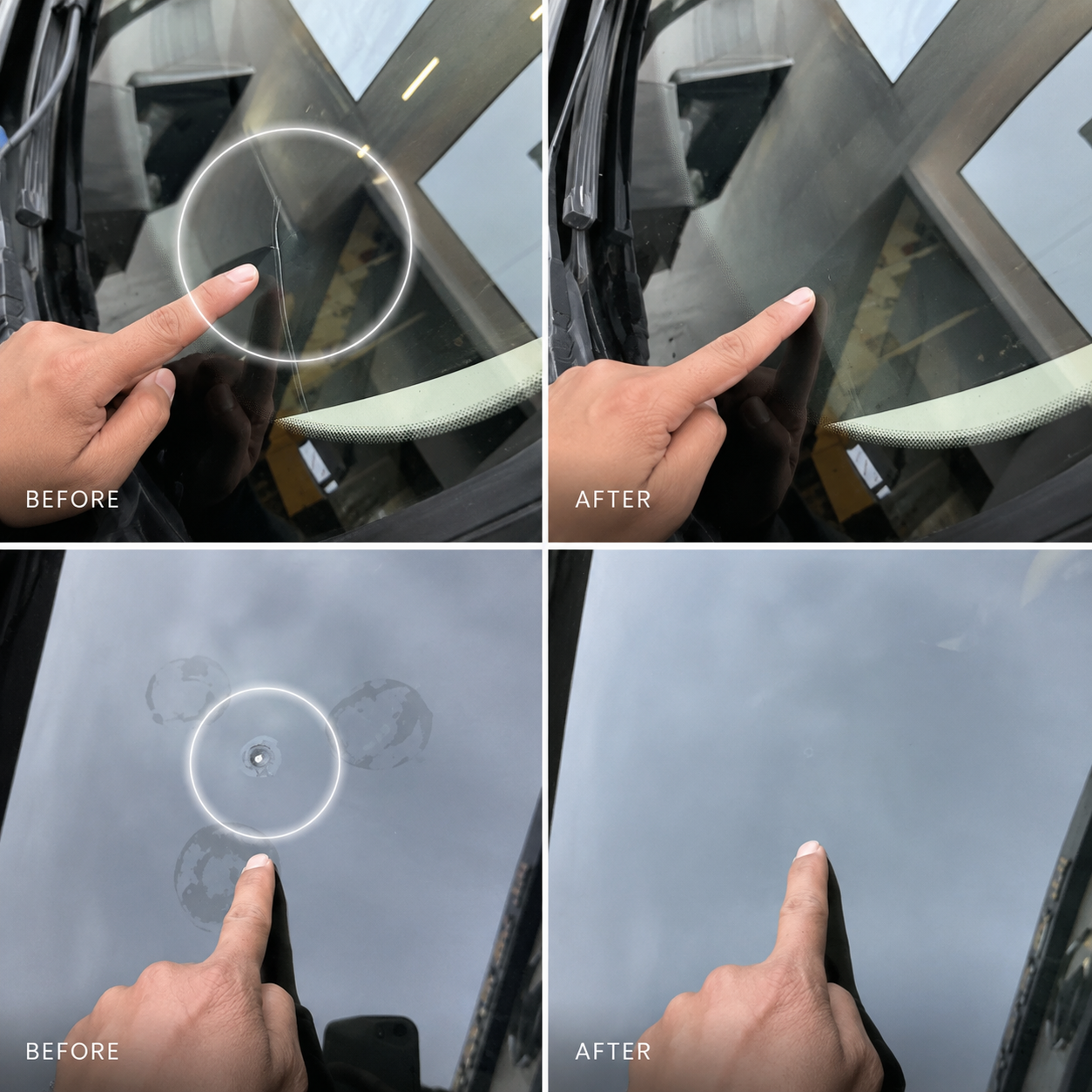
Rock chips come in a handful of shapes, and almost all of them are small. Bullseyes, star breaks, half moons, combination breaks, surface chips, short hairlines. That's what a highway rock leaves behind, and that's the lane this resin is built for — roughly quarter-sized or smaller.
What it isn't: a fix for a crack already running a foot across your glass. Nothing in a bottle is. The honest version of this product is that it handles the damage while it's still small, which is also the only window where anything works.
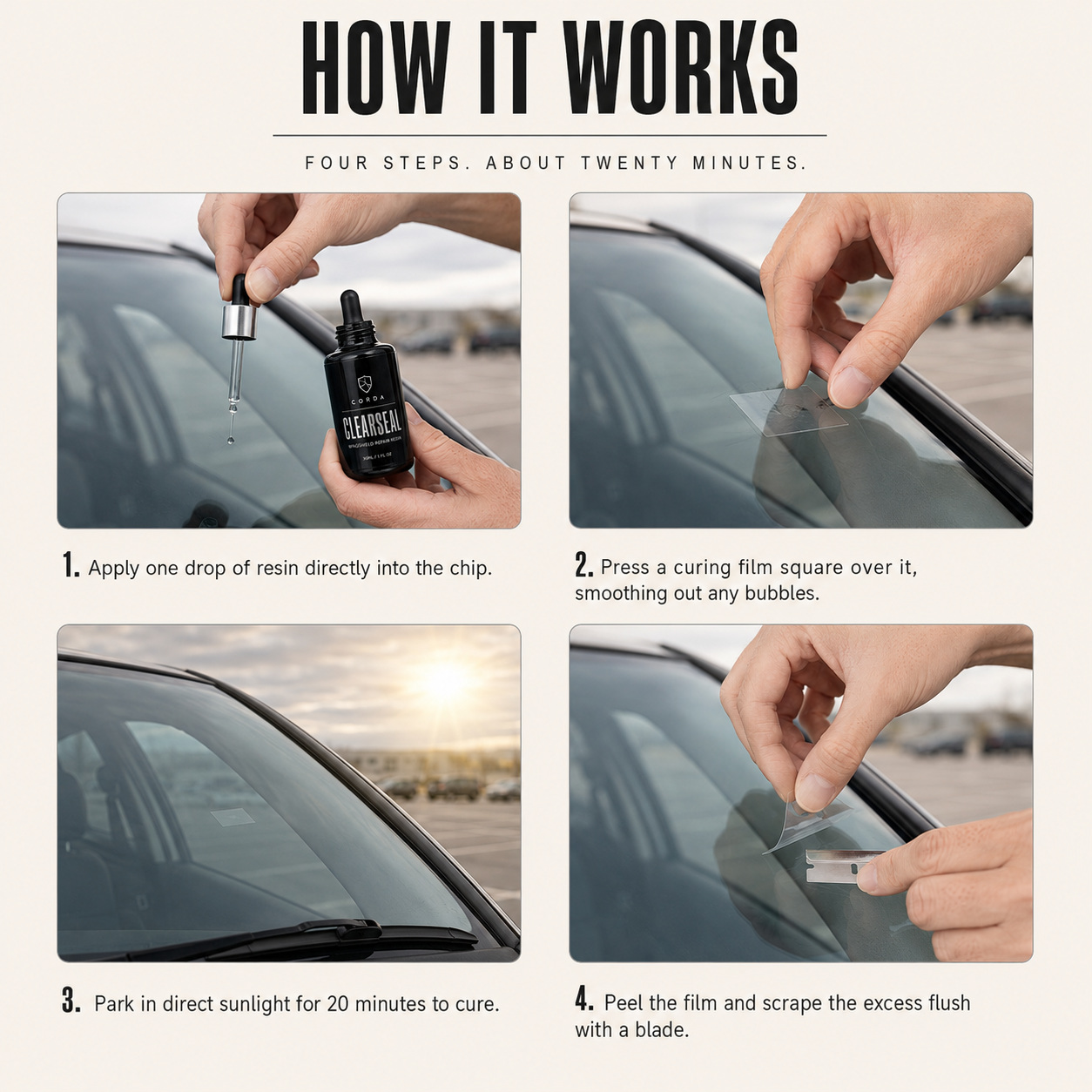
Four Steps, Twenty Minutes, No Tools and No Appointment
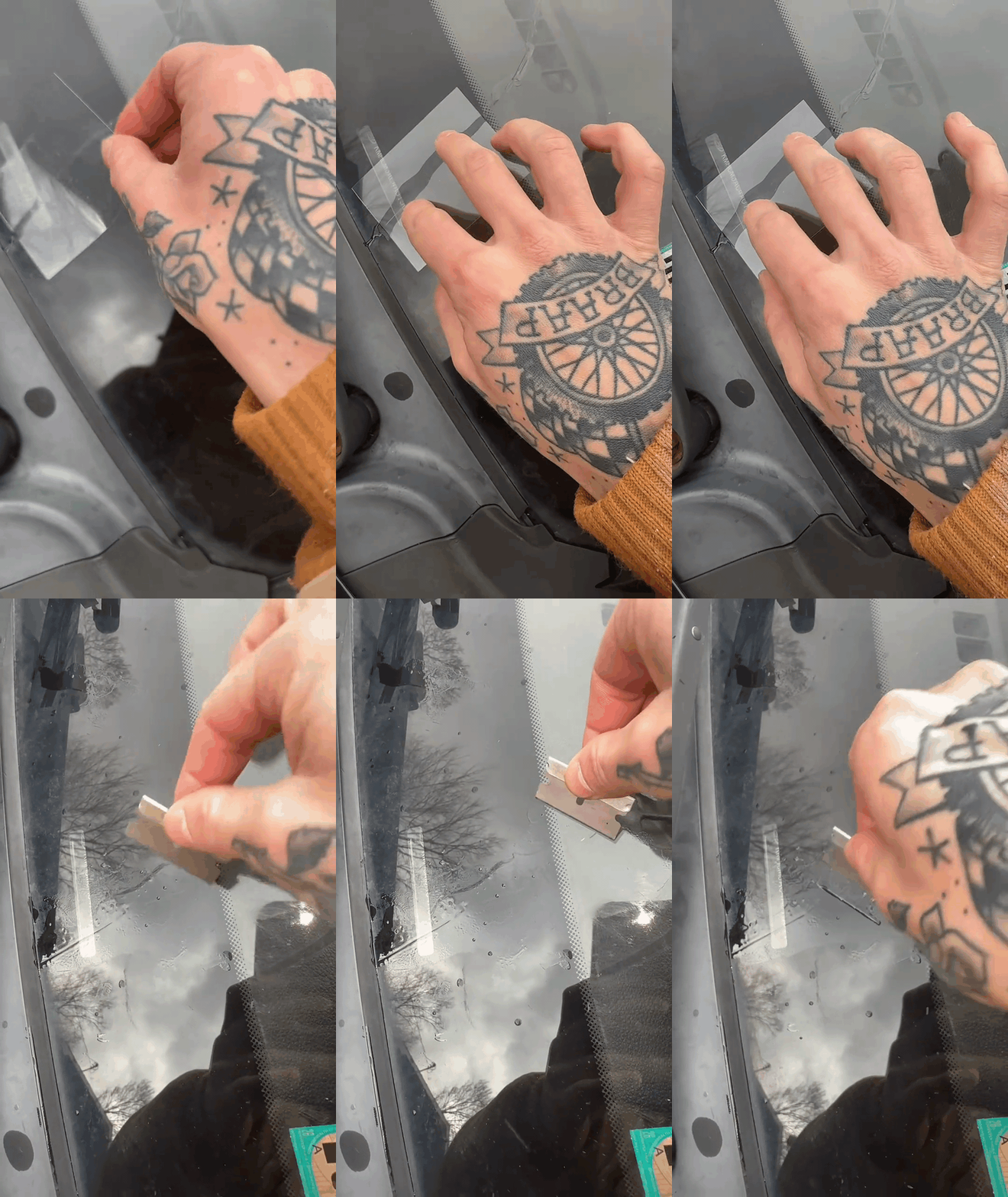
Apply a drop of resin into the break. Press a film square over it. Park in the sun for twenty minutes. Peel the film and run the blade flat. That's the entire procedure — no injector, no suction bridge, nothing bolted to your windshield.
The one thing worth getting right is doing it on clean, dry glass, because anything trapped under the resin stays there. Wipe the chip and let it dry first. That single step is the difference between a repair you forget about and one you notice every time you drive.
The “Free” Insurance Repair Isn't Actually Free
Plenty of insurers will cover a chip repair with no deductible. It sounds like the obvious move until you look at what it costs you. You need comprehensive coverage. You file a claim. That claim sits on your record for years, and it can cost you the claim-free discount — one of the largest discounts insurers hand out.
Then there's the appointment, the window of time, the car left somewhere. Or you handle it yourself in the driveway on a Saturday and your policy never hears about it.
A 30ml bottle of nano glass repair resin that wicks down into the break on its own, cures solid in sunlight, and locks the damage in place so it stops spreading. No injector, no bridge, no shop.
Why 50% off? Chip season runs from the first cold snap through spring, and we'd rather have bottles in glove boxes before the temperature starts swinging than sitting in a warehouse through it. When the Fall Sale ends, the price goes back to $59.99 and the film and blade go back to $19.99.
$29.95 puts the resin in your glove box before the next cold night decides how big that chip is going to be — 50% off during the Fall Sale, film and blade included free, and 30 days to change your mind.
Fix My Chip — Save 50% →